Final Bosu
Metora
- Direction
- Product design
- Design engineering
- 3D
- Game design
- Multiplayer
- UI
- UX
- Campaign
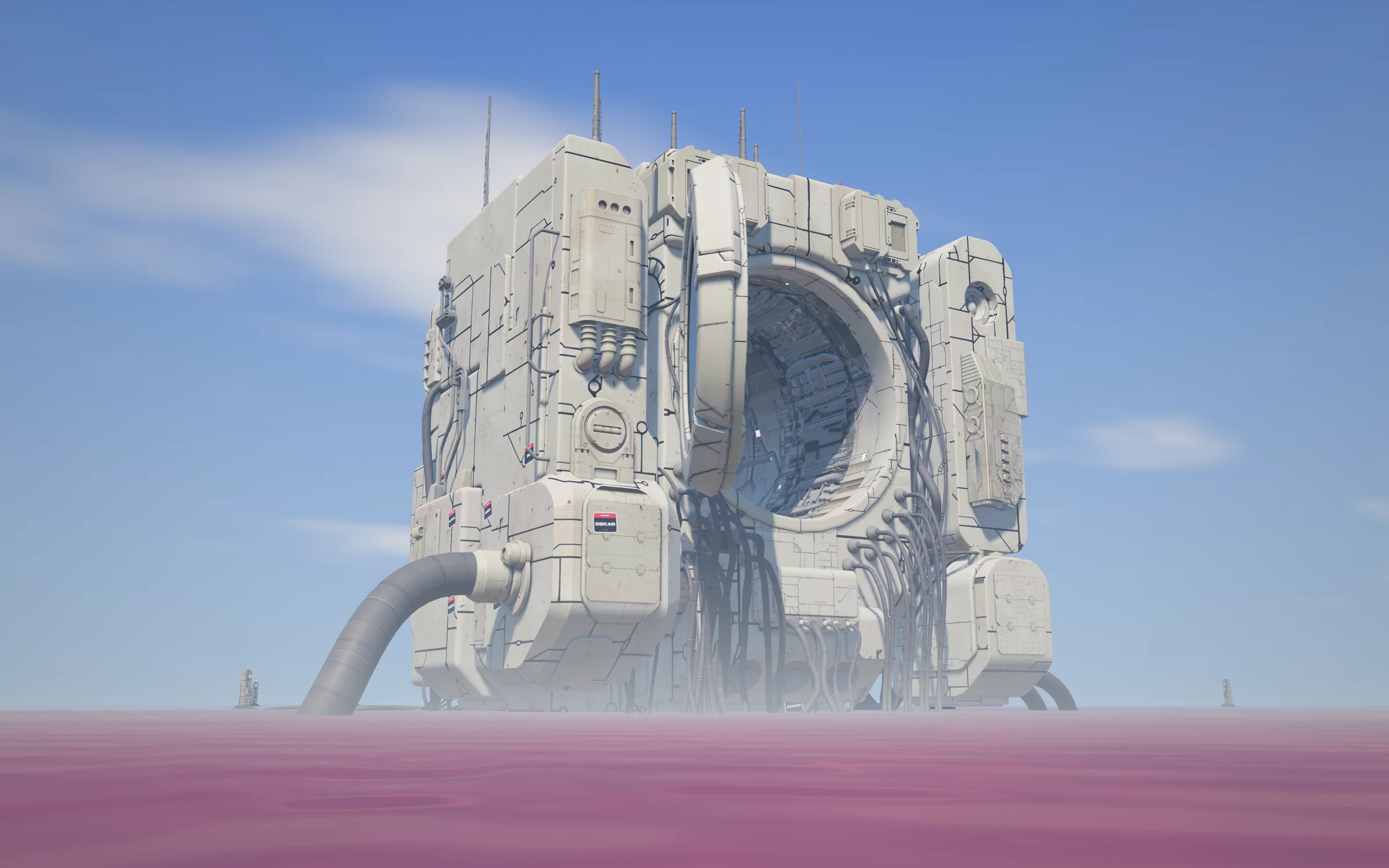
Metora is the machine in Final Bosu's red lake that brings the dead back to life. For its campaign I directed a 3D game in the browser where you wake up in that lake, look for Fragments and leave your name on the machine. I ran the project from brief to launch and built it myself in a matter of hours, working in quick iterations with the team. After launch I opened a live lobby where collectors meet, fight and talk, and it went from its first room to its own game mode in under a day.
metora.finalbosu.com

- Role
- Product Design & Development
- Team I led
- 3D Artist, Designer
- Build time
- A matter of hours, in quick iterations
- Runs on
- Any browser, on computers and phones
- Built with
- Three.js, WebGL
- Launched
- 29 October 2026
The machine in the lake
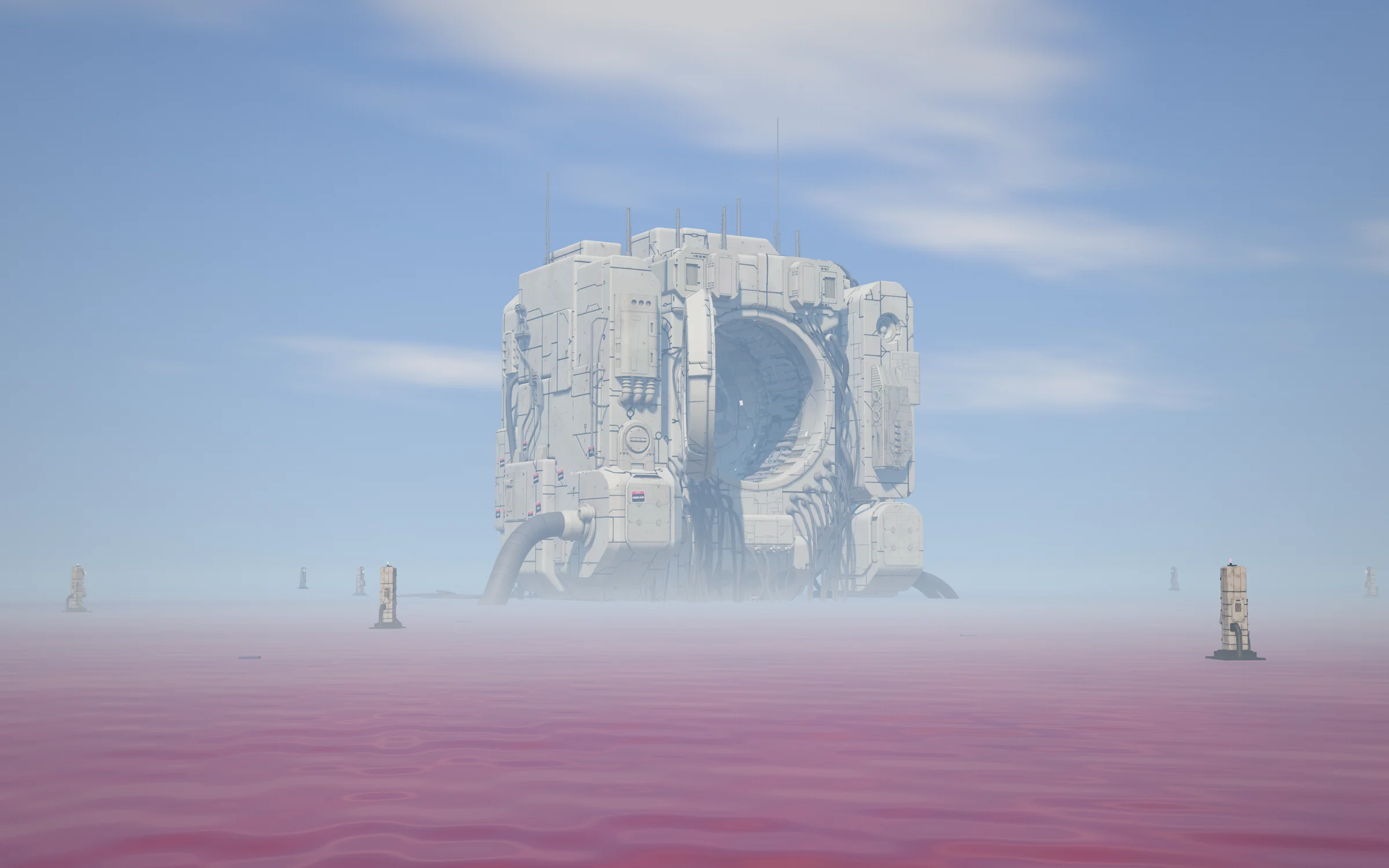
In Final Bosu, nobody stays dead. When someone dies, their signal is pulled back to Metora, a huge machine standing alone in a shallow lake the colour of blood, and it rebuilds their body. They wake up in the water with only part of their memory, and nobody tells them what happened.


The brief
Final Bosu wanted people to feel what it's like to wake up at Metora, especially people who had never heard of the universe. It had to open in any browser, on phones as well as computers, and there had to be something to do once you got there.
I split it into two acts. In the first you arrive. In the second you walk around the machine as a character, and you can write your name on a sticker and put it on Metora, look for Fragments in the lake to enter a prize draw, or watch the campaign's videos on pillars around it. I designed it on the Final Bosu design system, which I created, so it matches the rest of Final Bosu.
How I ran it
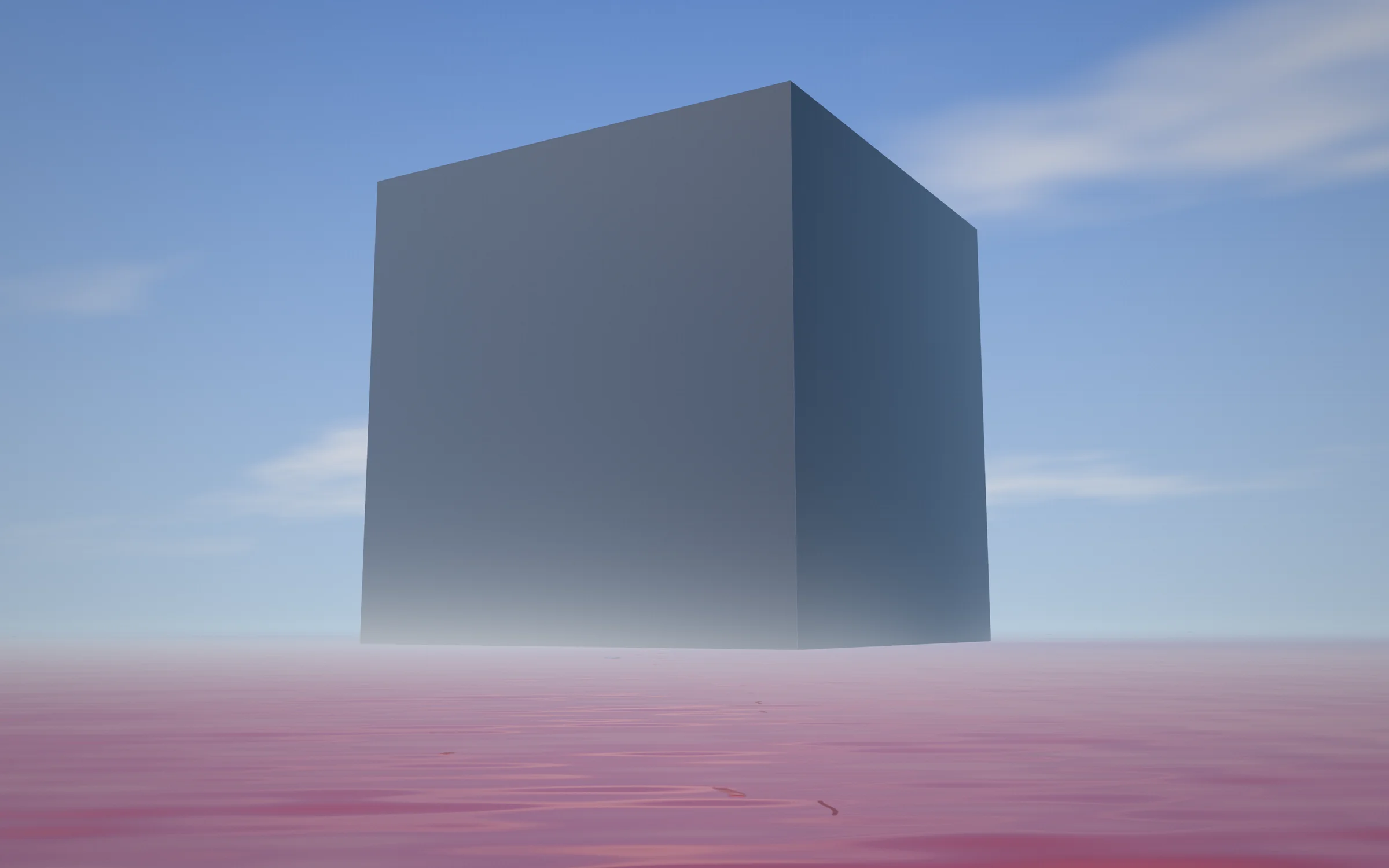
The first playable version was ready a few hours after the brief, with a cube standing in for Metora, the lake, thirty Fragments and a figure in a red blanket. Having something to play that early meant the team reacted to the real thing from day one. We kept the loop short. When the 3D artist delivered a new round of the model it went into the game straight away, I sent my notes back the same day, and new ideas were playable within hours.


Waking up
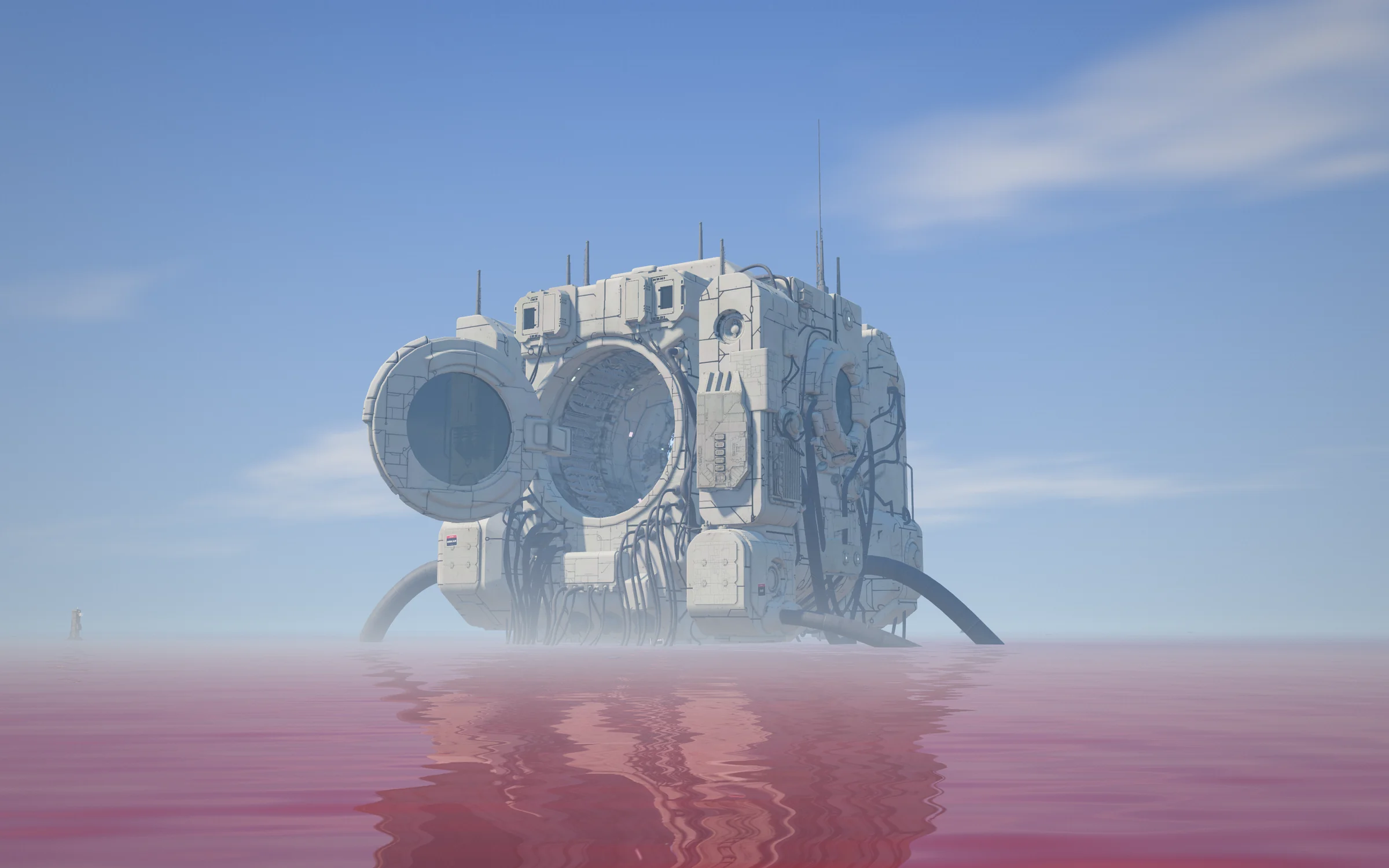
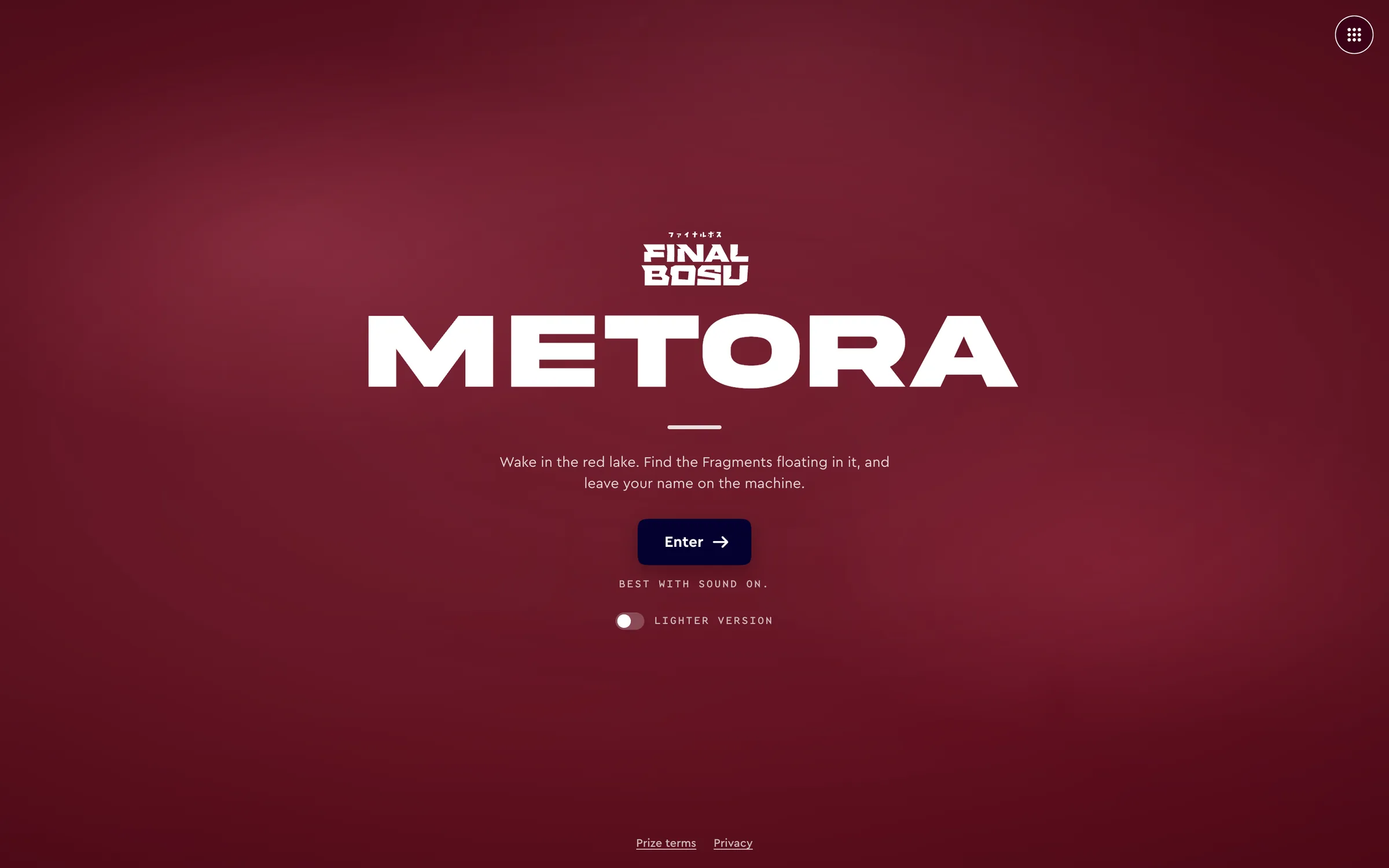
I wanted the first seconds to feel like waking up after being rebuilt. The title screen shows the lake as a red blur behind drifting liquid, as if your eyes haven't opened yet. When you press Enter, the blur holds for a moment and then slowly sharpens while the camera glides across the water to the machine.
Walking the lake
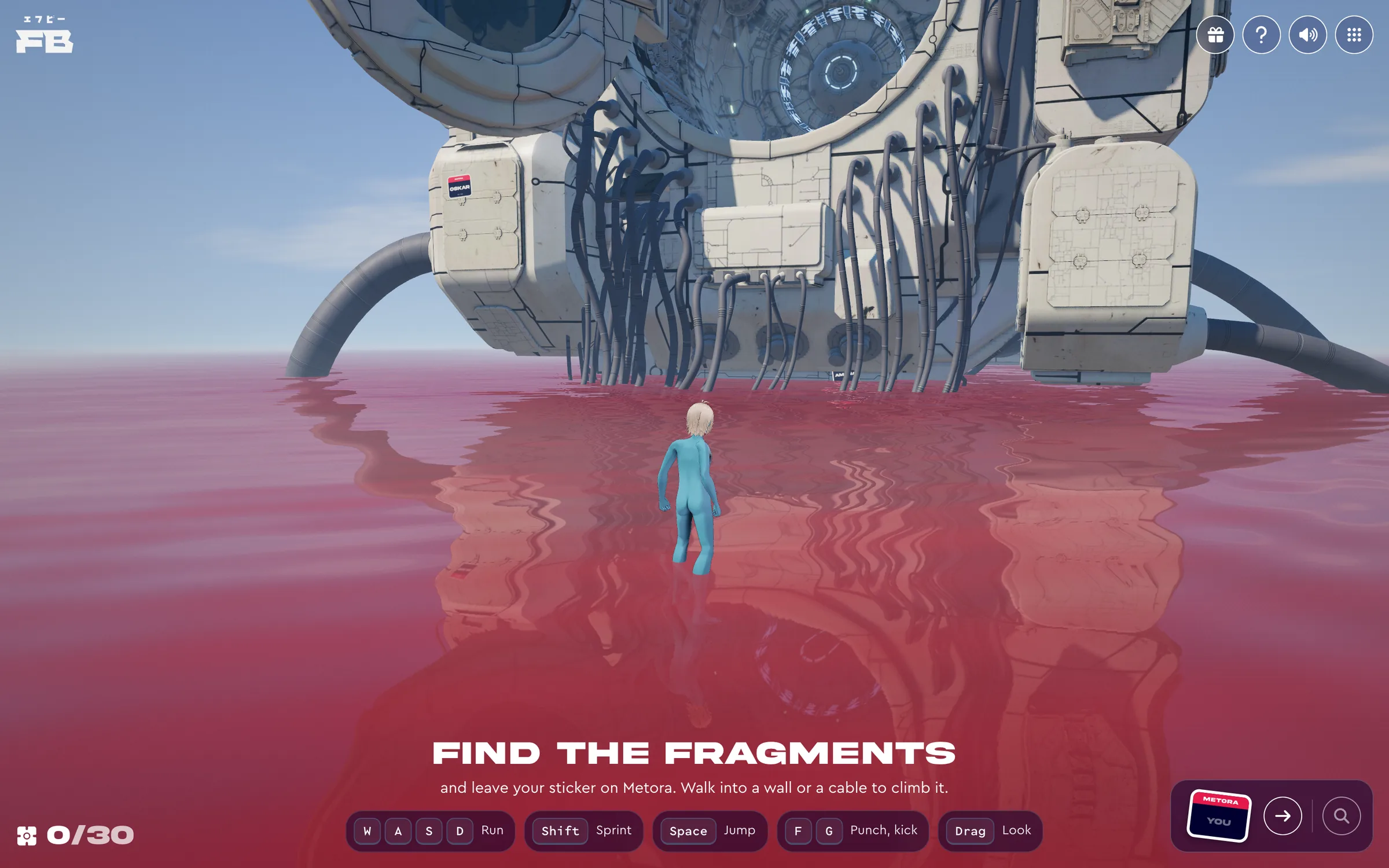
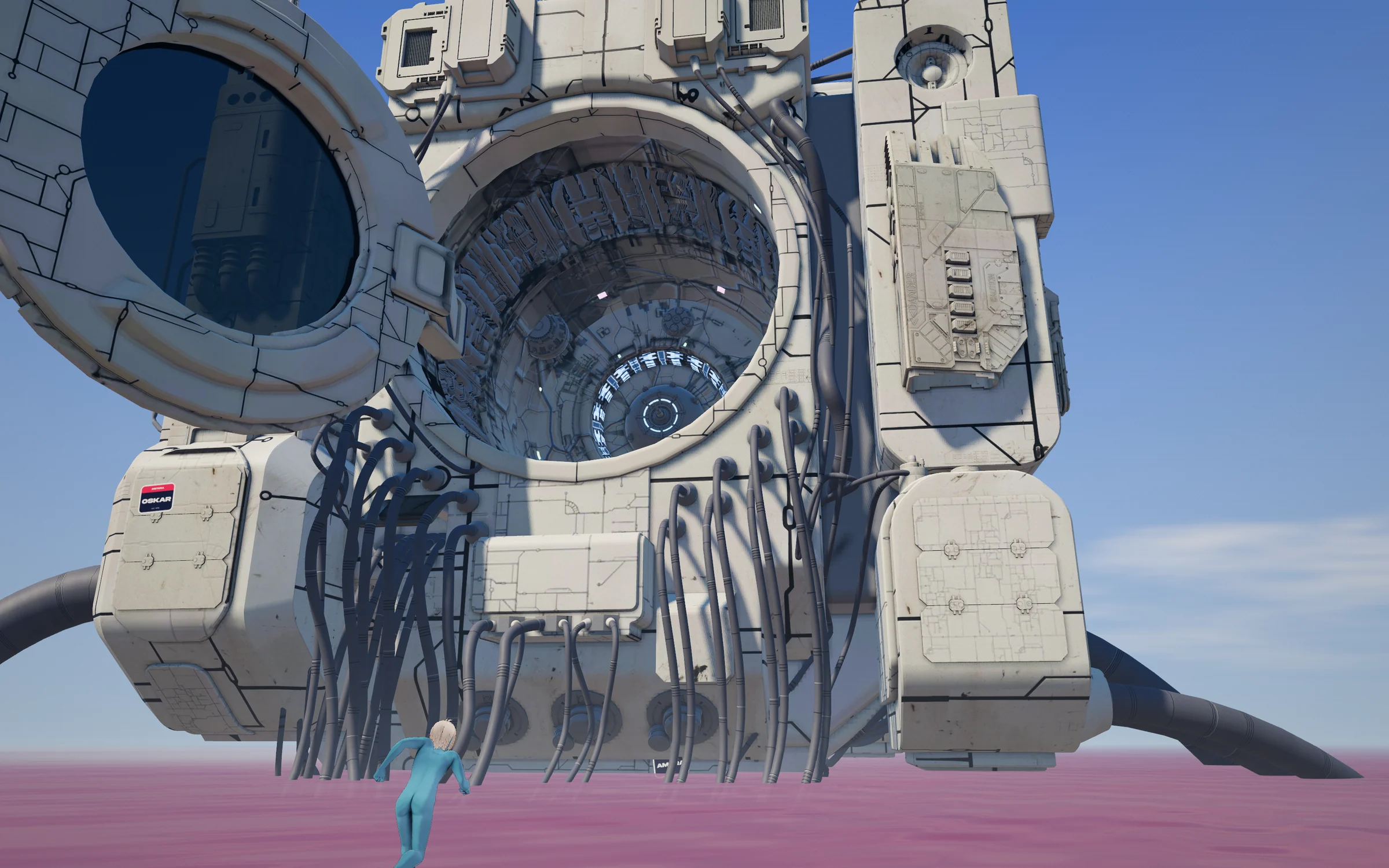
You play in third person, and it controls like an action game. You can run, sprint and jump, climb the cables and the hull up to the roof, run along walls, and punch or kick. The lake has its own shader with swells, ripples around your legs and Metora reflected in the surface. On computers there are sun shadows, bloom and a film-style colour grade on top.
Leave your mark
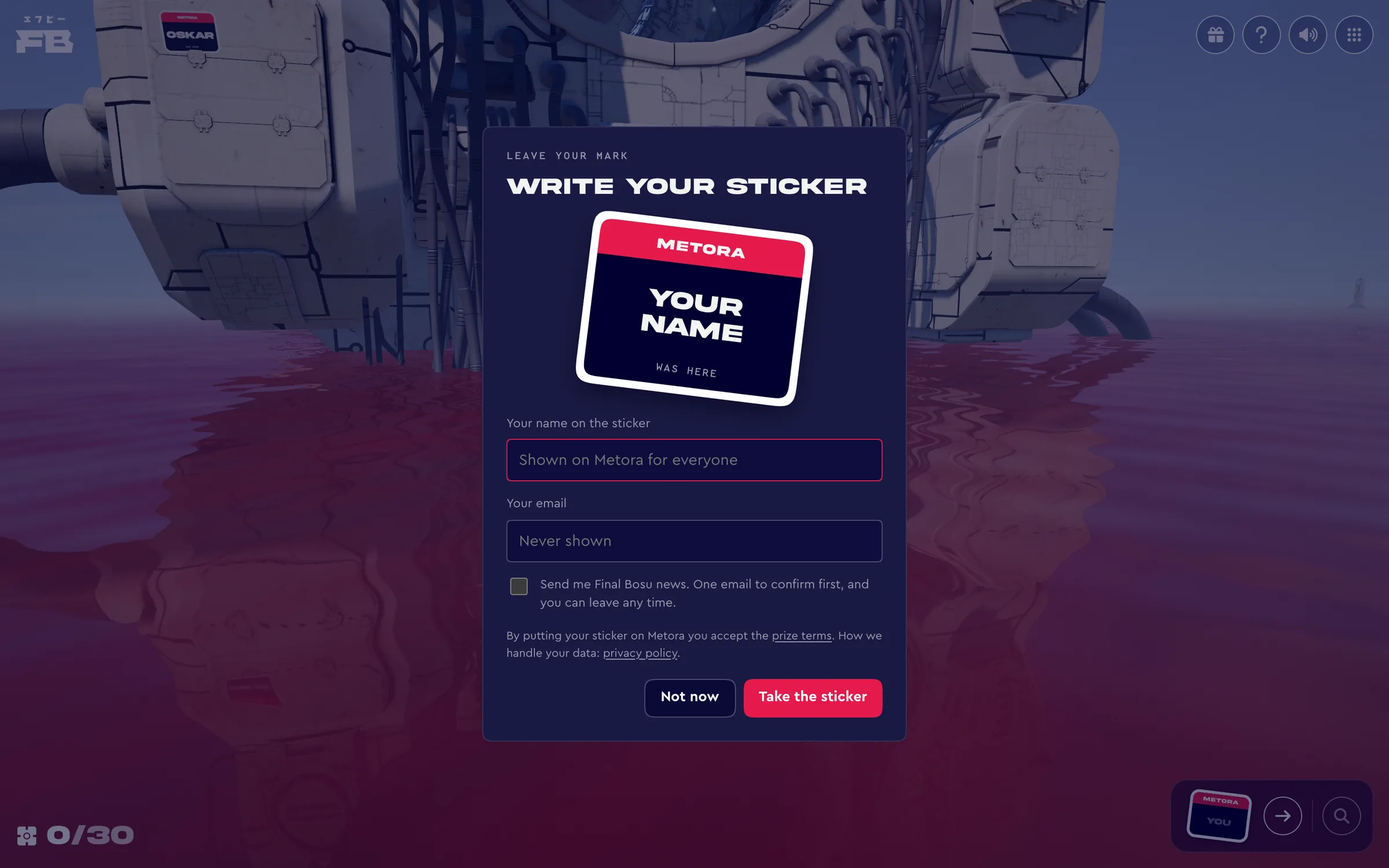
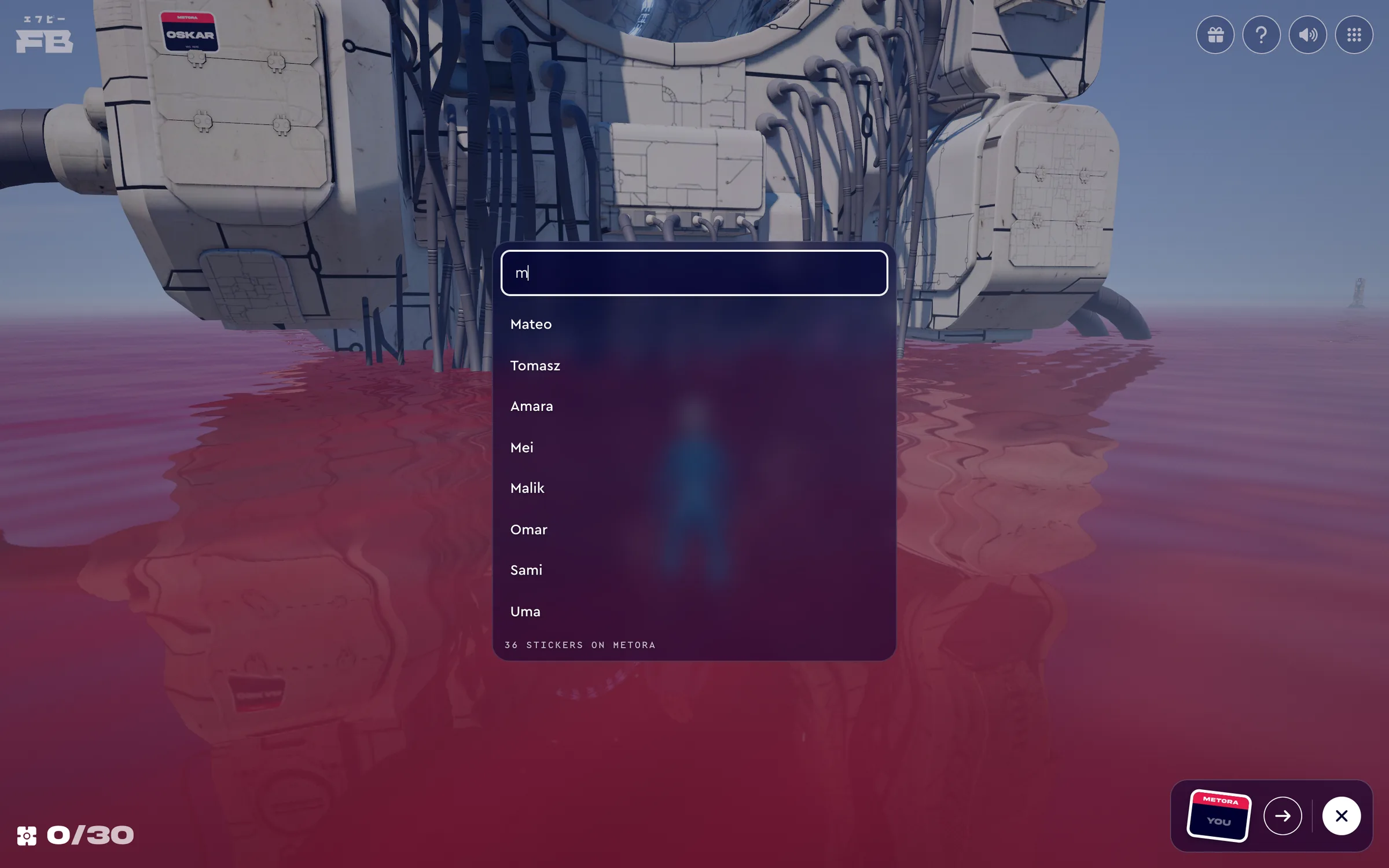
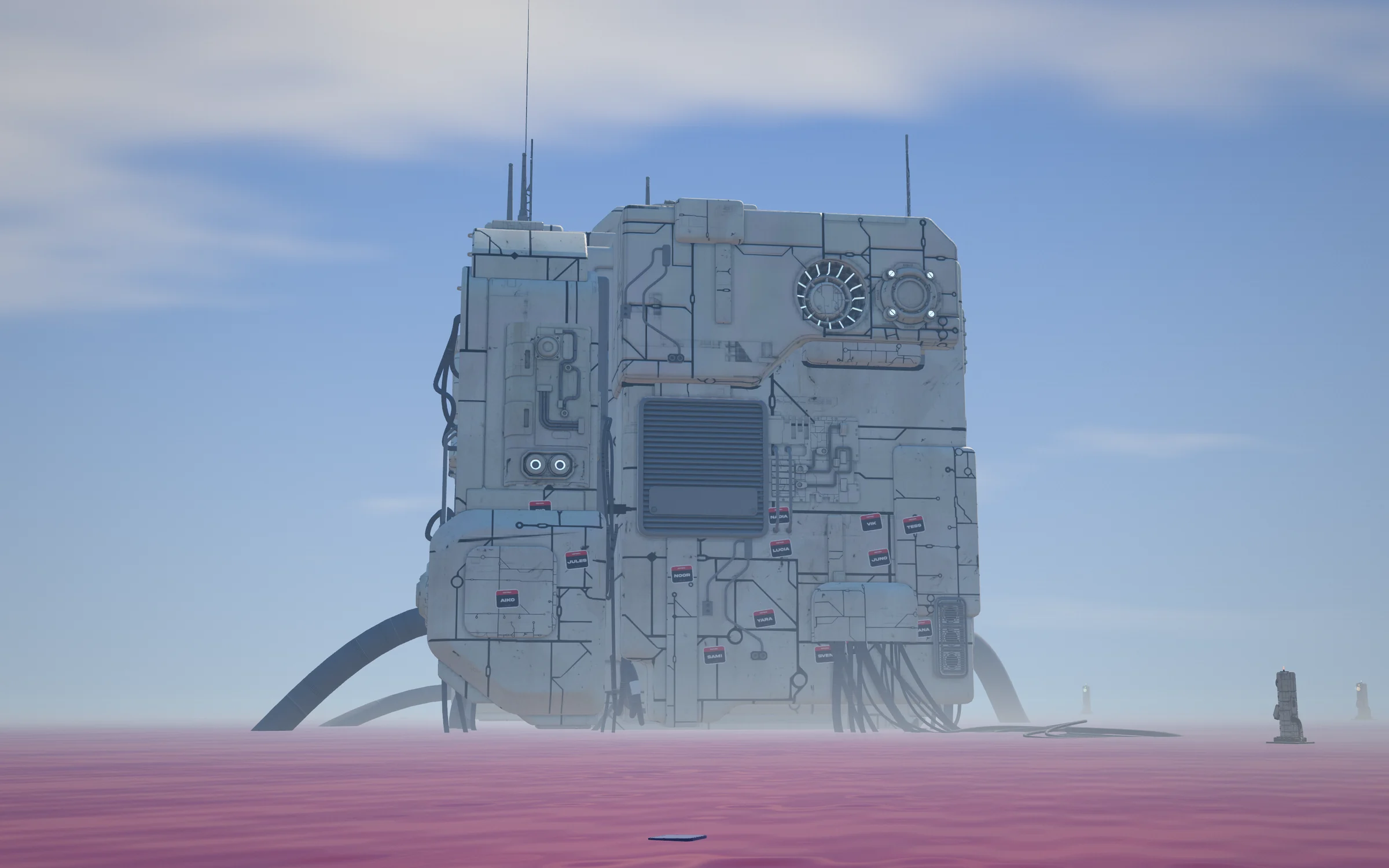
Your sticker carries your name, and you can put it anywhere on the hull, including the roof. It stays there for everyone who visits. A search finds any name and flies the camera to it, and each sticker has its own link with a preview card, so people can share where theirs is.


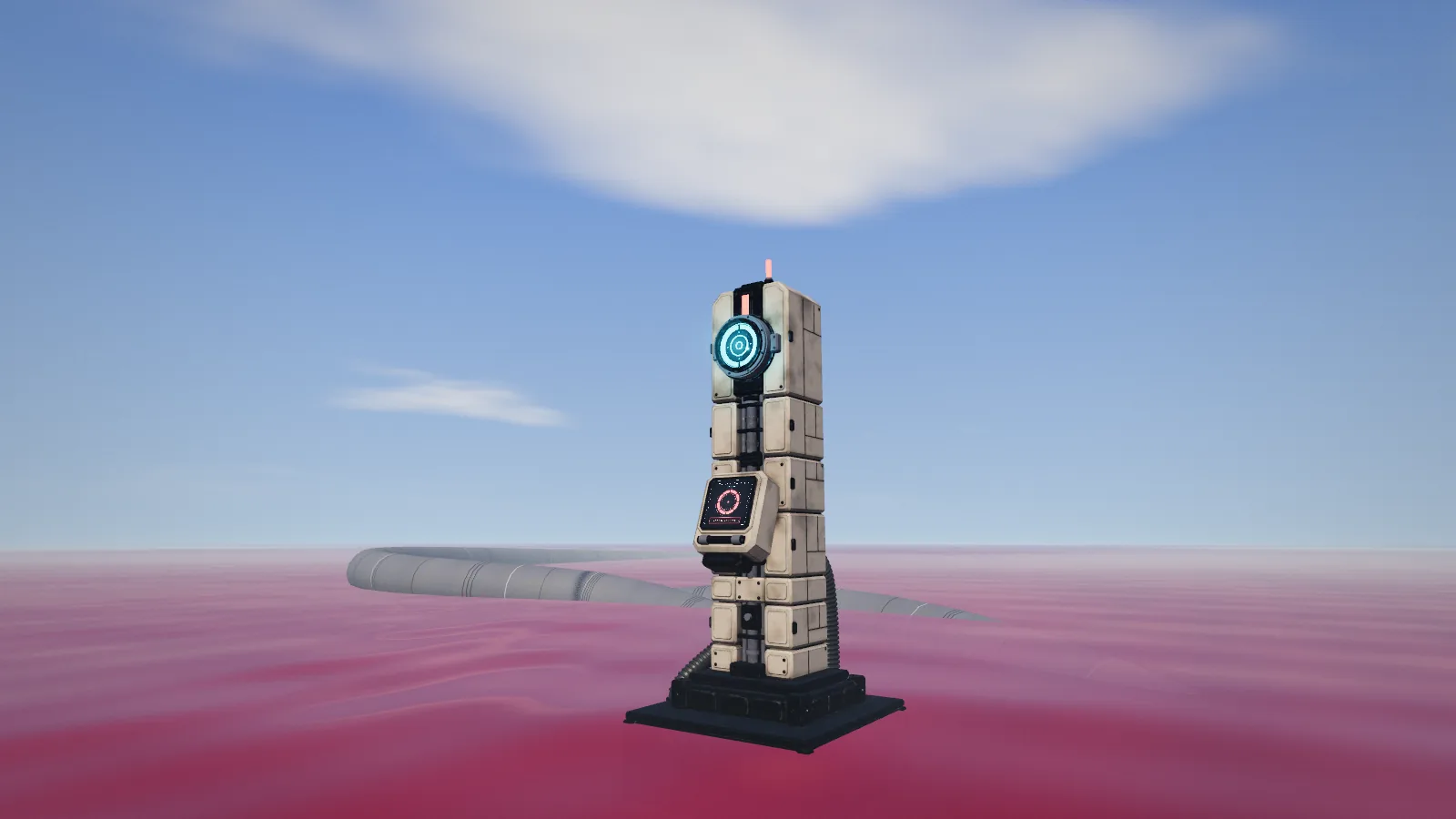
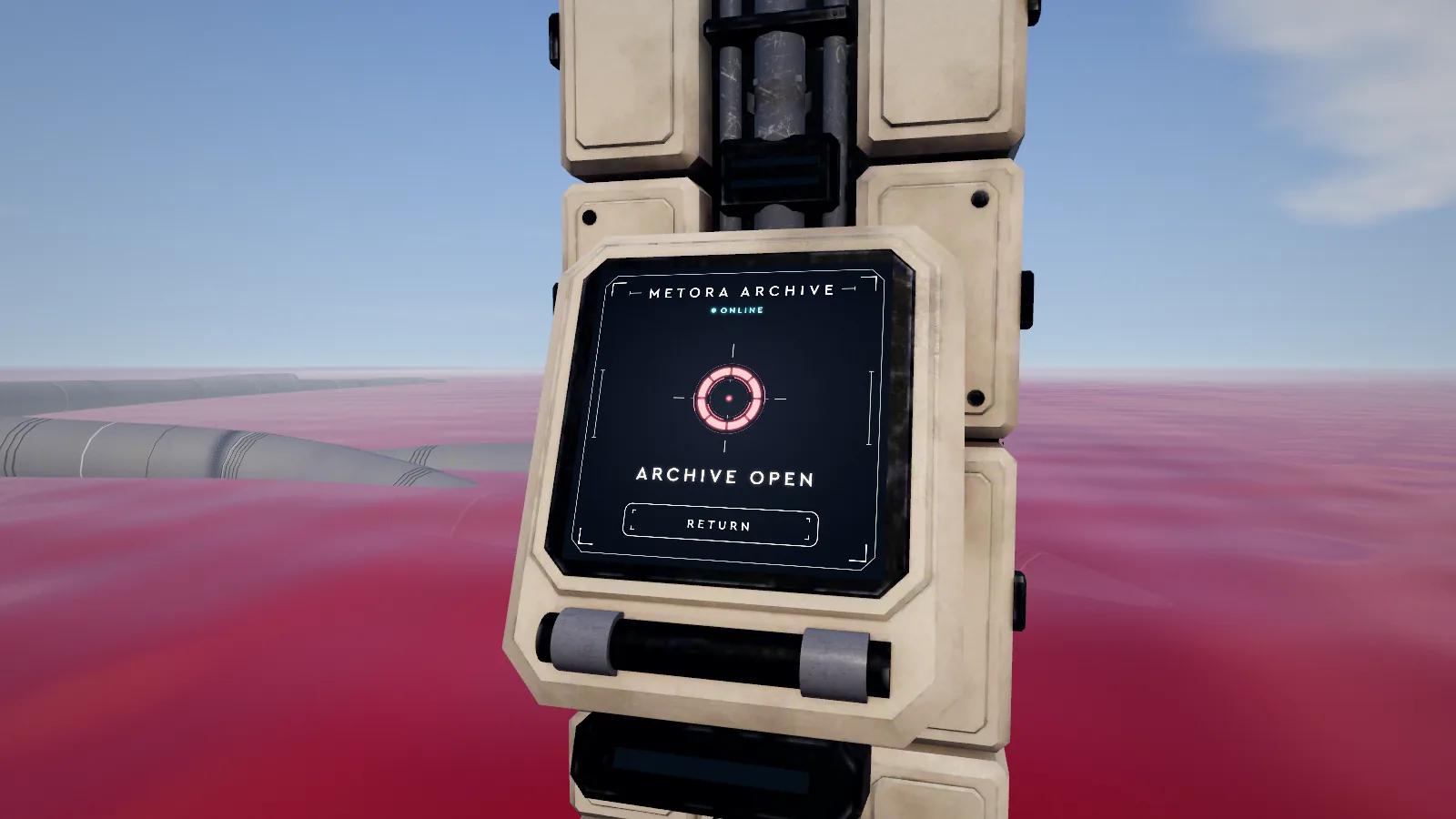
The Fragments give people a reason to explore. There are thirty of them lying flat on the lake, far from the machine, and the only sign of one is an occasional glint. Eight pillars around Metora play the campaign's videos and the story of the archive. Each Fragment you find and each video you watch to the end gives you tickets in a prize draw for Metora hoodies.


On a phone
The campaign ran on social media, so it had to work on a phone from day one. You move with a stick under your thumb, drag to look around and tap a button to jump. Phones load a lighter version of the model, and older phones can switch on the Lighter version on the title screen.
For the ads I recorded a run and placed it in a phone frame, cut out so it works on any background.
The model
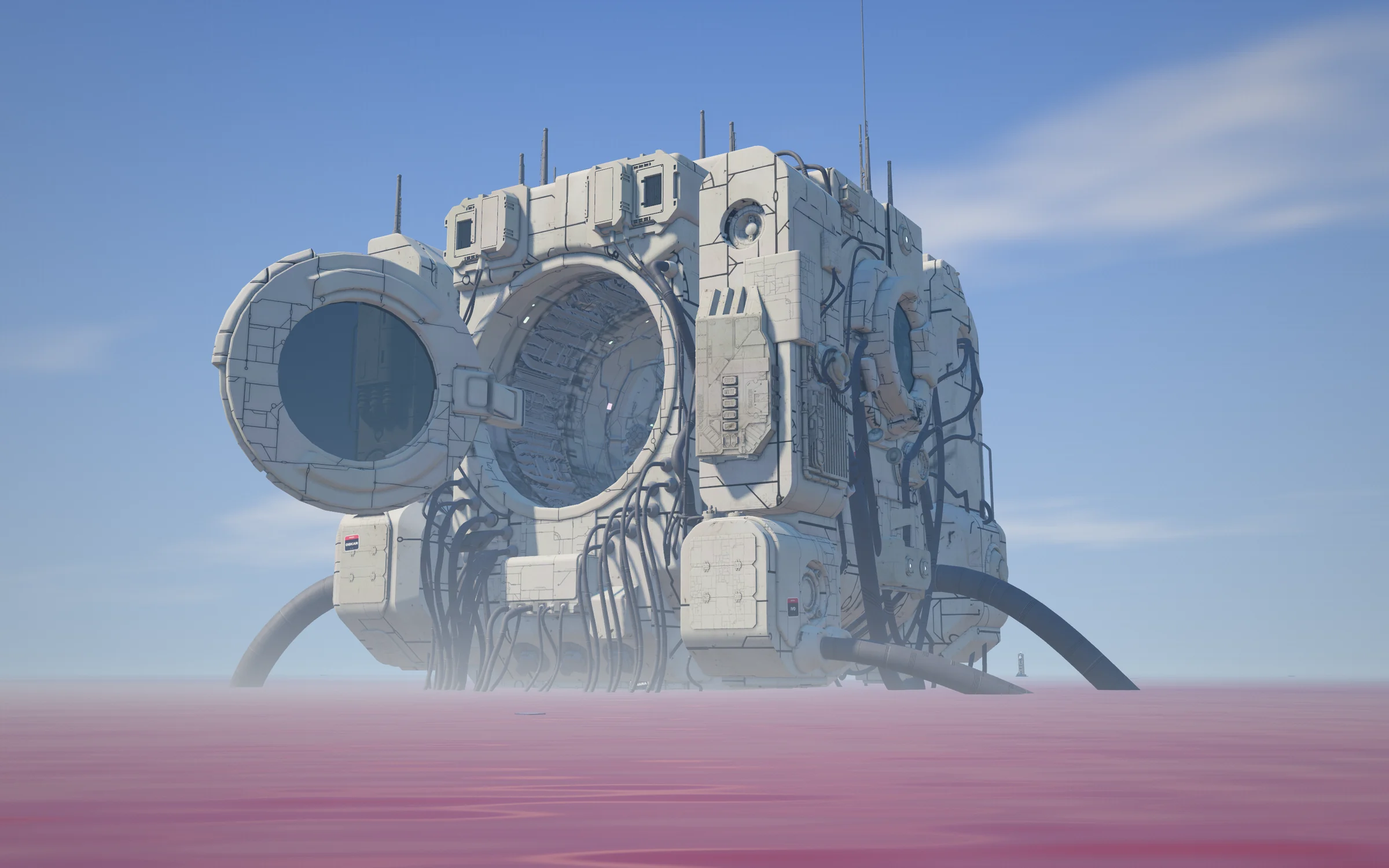
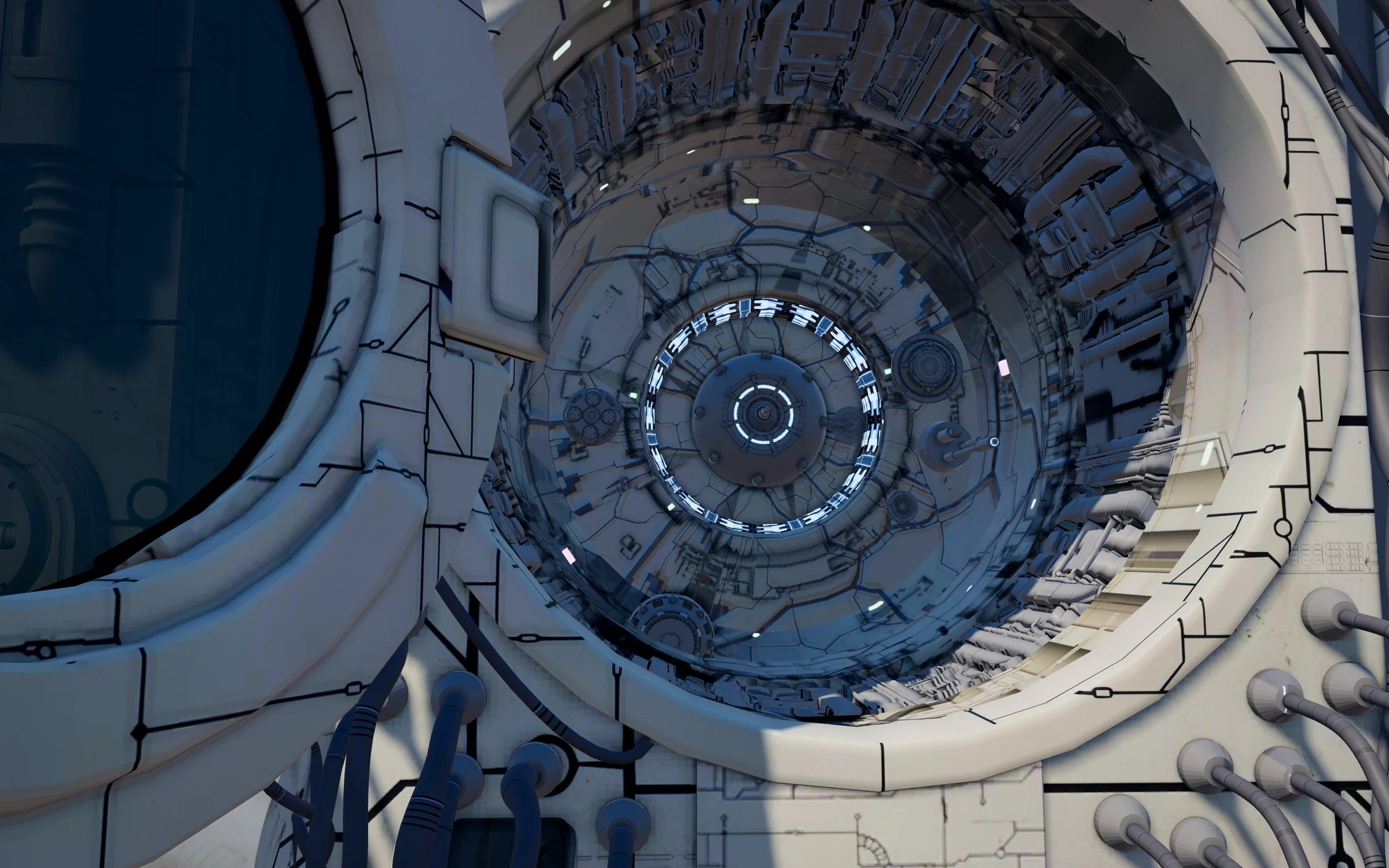
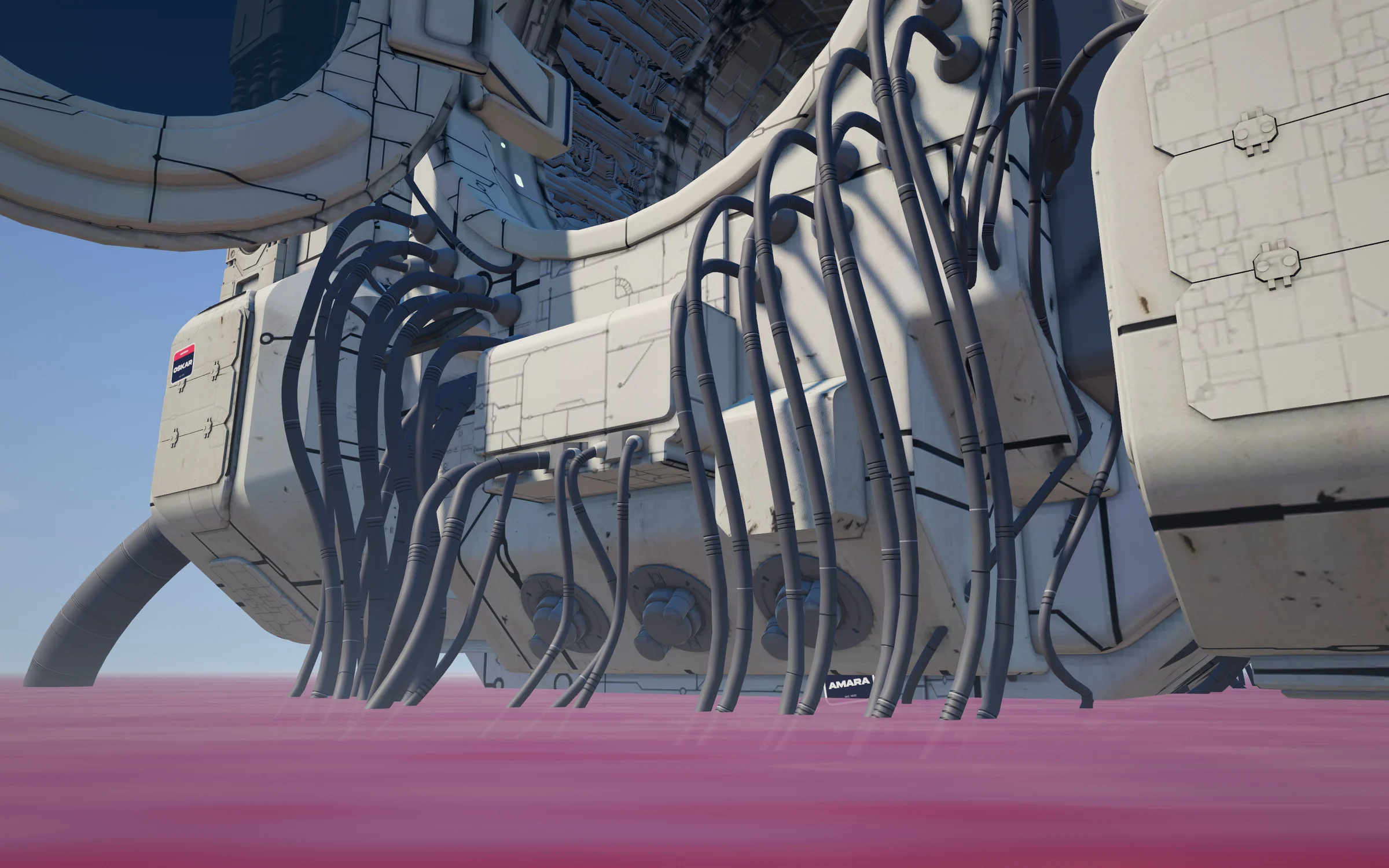
I directed the 3D artist through eight rounds of Metora and reviewed each one inside the game, where people would actually see it. My notes turned the hatch window into glass, made the cables hang down into the lake and set the machine on the water. Each round was converted from his master file into two versions for the browser, a full one for computers and a lighter one for phones. Compressed textures and packed meshes keep the hull sharp up close while it still loads on a phone.
- The artist's master file
- 196 MB
- For computers
- 61 MB, about 2 million triangles
- For phones
- 25 MB, about 750,000 triangles
How it's built
Metora is a single Next.js app. The 3D scene is plain Three.js on WebGL without a game engine, and React handles everything around it, like the title screen, the controls, the cards and the archive screen. The same app runs the server side, which stores the stickers, keeps track of each Fragment hunt and handles sign-ins.
The 3D
Render loop
A single loop draws the sky, the lake, Metora and the player. The lake's reflection renders at half resolution every other frame.
Fog
There's haze in the distance, mist on the water and a pink fog at the start that clears as you get closer to the machine.
Two versions of the model
Computers and phones each load their own version, with compressed textures and packed meshes.
Character animation
The 3D artist's character can walk, run, climb, run along walls, vault, punch and kick.
Sound
You hear water all around you, and Metora's hum only when you get close.
Automated tests
Test runs climb every route up the hull on both versions of the model, to catch anything a change breaks.
Speed
Load time
Setting up collision for the hull went from about 28 seconds to about 1.3.
Starting the game
Building Metora in smaller steps cut the longest freeze after pressing Enter from 6.7 seconds to 0.6.
Frame cap
The game runs at up to 60 frames a second and the title screen at 30, which keeps laptops cool and quiet.
Physics
The player is a capsule that collides with Metora's own shapes, which costs a fraction of a millisecond per frame.
Adaptive quality
On a slow device the game first turns off the lake's reflection, then lowers the resolution step by step.
Caching
The sticker wall and the counters are cached close to each visitor, so they load quickly when traffic peaks.
Accounts and sharing
Verified accounts
Visitors can verify with Memo ID, Discord, X or Google. Each verified account multiplies their tickets, up to five times.
Memo ID
Memo ID connects through MEMO, Final Bosu's collector app. You confirm there and land back in the lake, and it also signs you back in on another device.
Account safety
A connection only counts in the browser that started it, so a shared link can't attach someone else's account to your sticker.
Share cards
Each sticker has its own link with a preview image rendered from the game.
Site switcher
A switcher links Metora to Final Bosu's other sites, with its own icon traced from the model.
Design principles
The interface sits over a game, so it had to stay out of the way and still be readable against a bright sky, a pale hull and a red lake. I set these rules at the start so every screen followed the same standard.
Interface rules
Focus states
Focus is a single white ring. If an element already has a border, that border turns white.
Nested corners
A corner inside a box runs parallel to it, so its radius is the box's radius minus the padding.
Icons
Icons are solid so they stay readable over the sky and the lake.
Buttons
Every button is a white ring with a solid icon that fills white on hover and focus.
Panels
Panels are translucent navy, so the lake stays visible behind them.
Phone layout
On phones the controls sit on one line at the bottom and everything else goes into a menu.
Launch
Metora went public on 29 October, and we kept shipping after launch. Fixes for weaker phones went out the same day, including the Lighter version, which is on by default for phones with 4 GB of memory or less. The next day a reload started keeping your Fragment hunt.
The holders' lobby
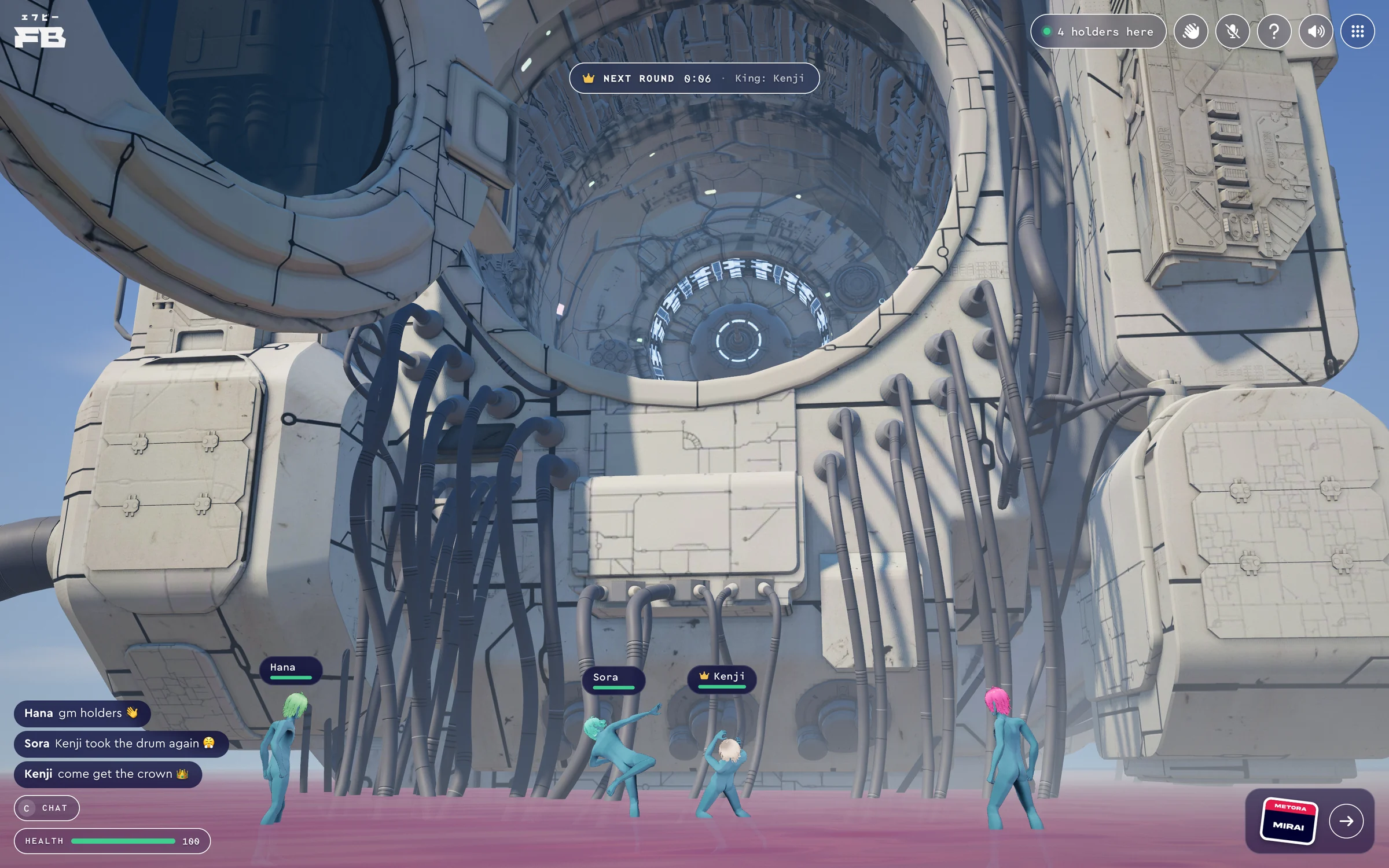
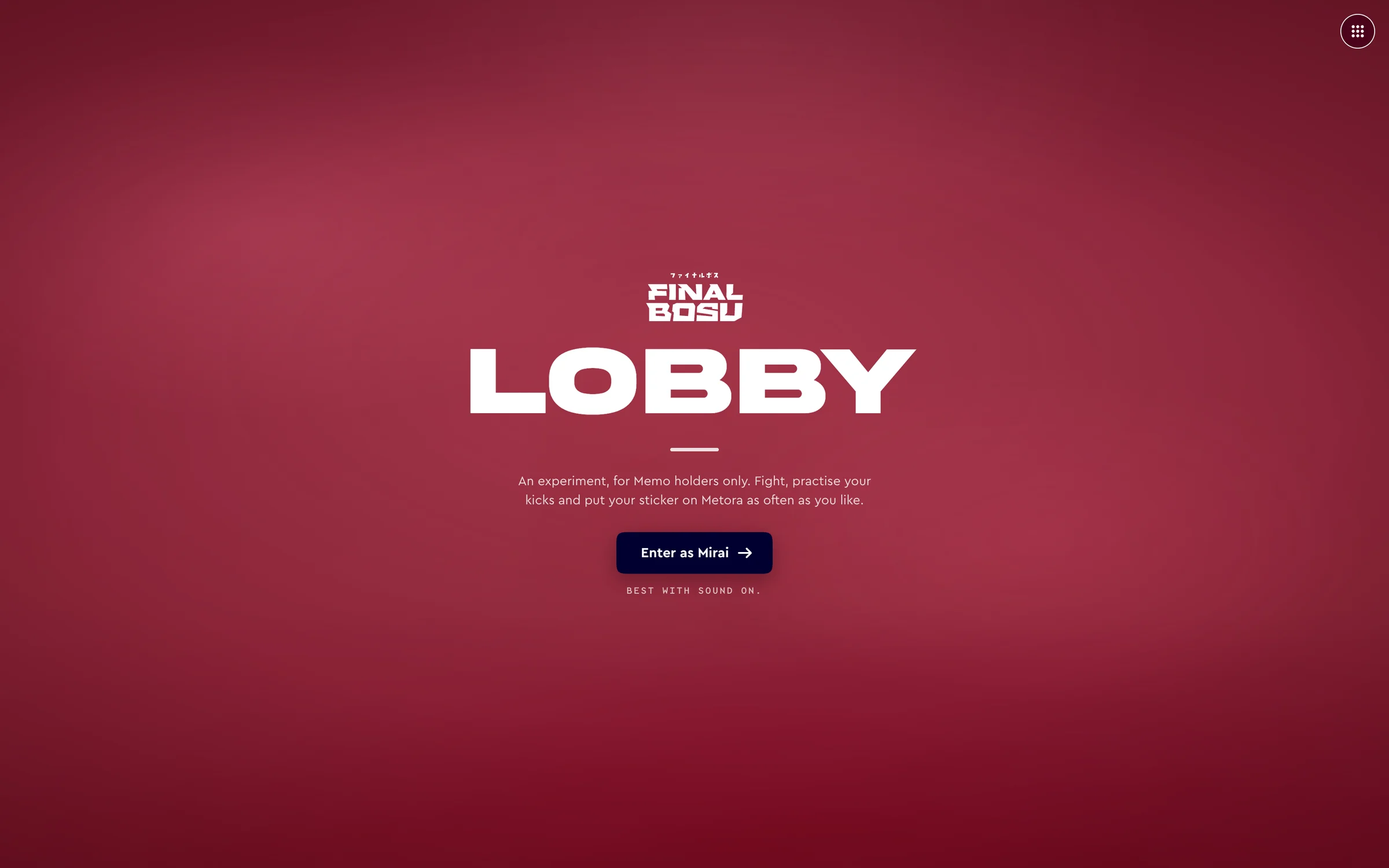
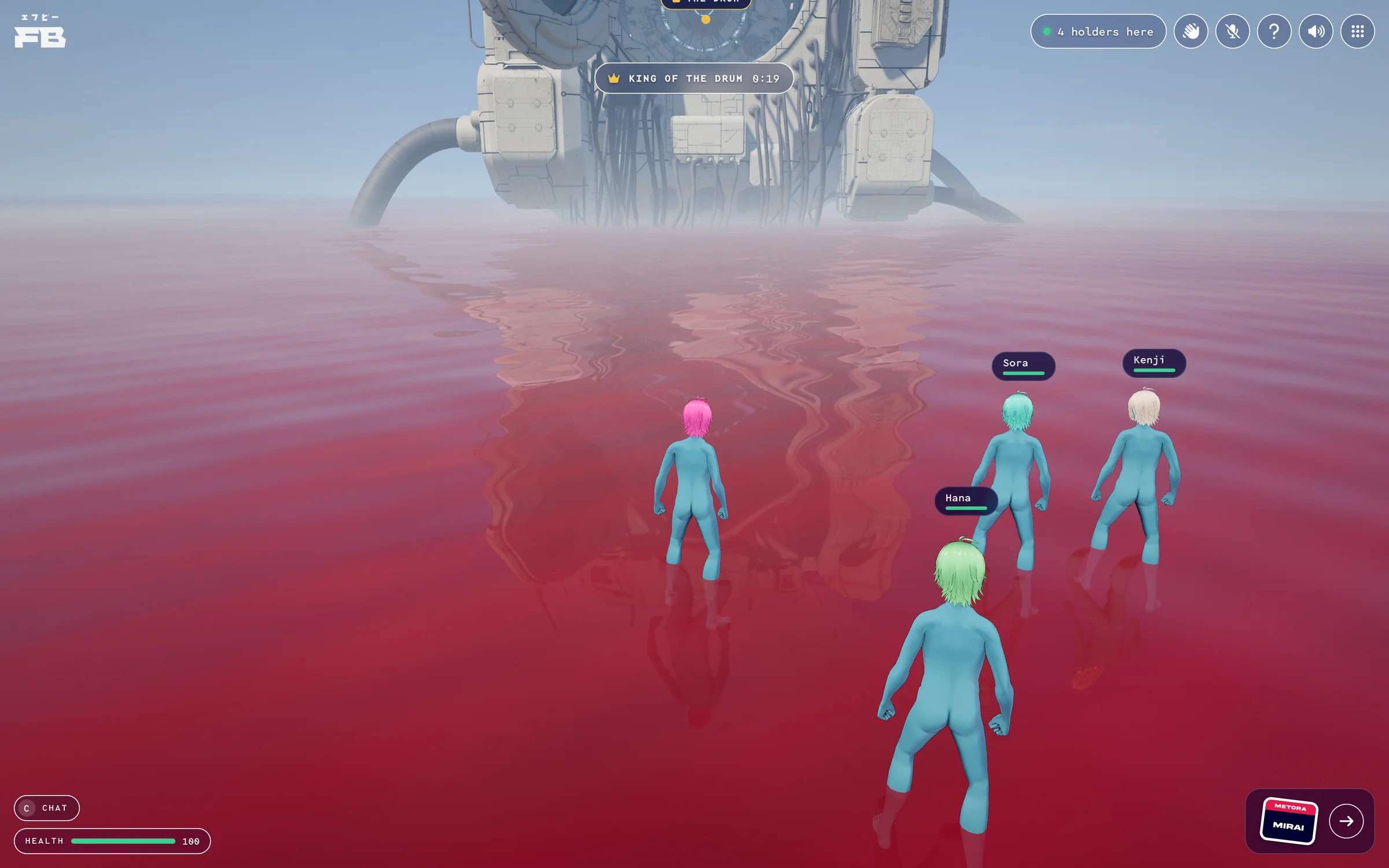
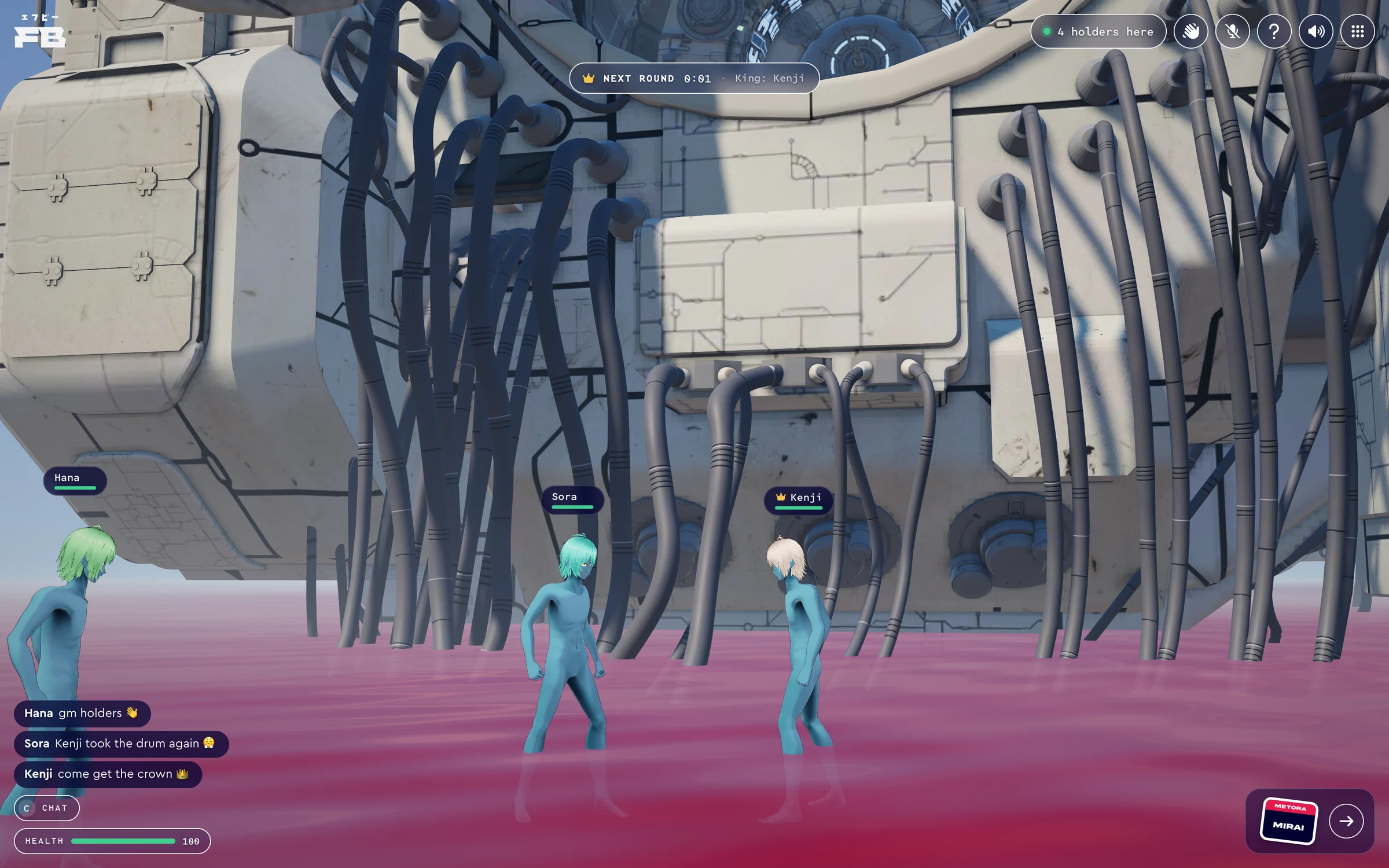
After launch I opened a second place on the lake, only for collectors who hold a Final Bosu Character. They come in through MEMO, Final Bosu's collector app, and meet in a lobby without the hunt, where up to 40 holders see each other live, fight, talk and put up stickers together. Every holder's Metora character wears the hair of their own Character. The first room went up late one evening, and by the next afternoon it had real fighting, voice and a game mode of its own.


Fighting with depth
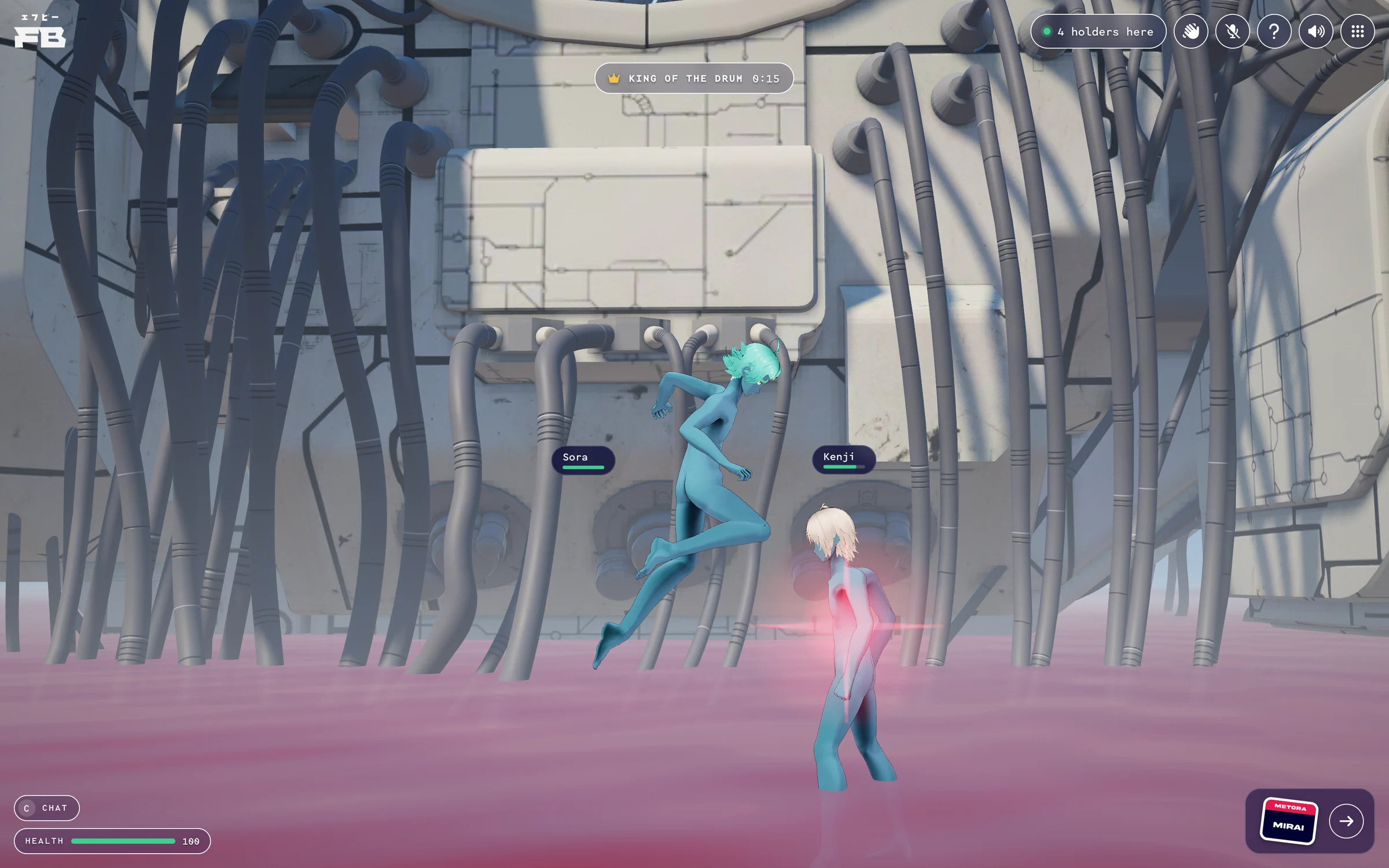
Every blow lands with a proper reaction, and the room decides how it is taken, so every screen sees the same fight. There is a four-punch combo, a guard that takes most of the damage, and an instant respawn in Metora's drum. Fifteen moves wait in the controls for players to find, from a flying knee to a capoeira spin and a leg sweep, and each one gets a banner the first time it lands. Hits sound light, medium or heavy, and everyone hears them from where they land.
King of the Drum
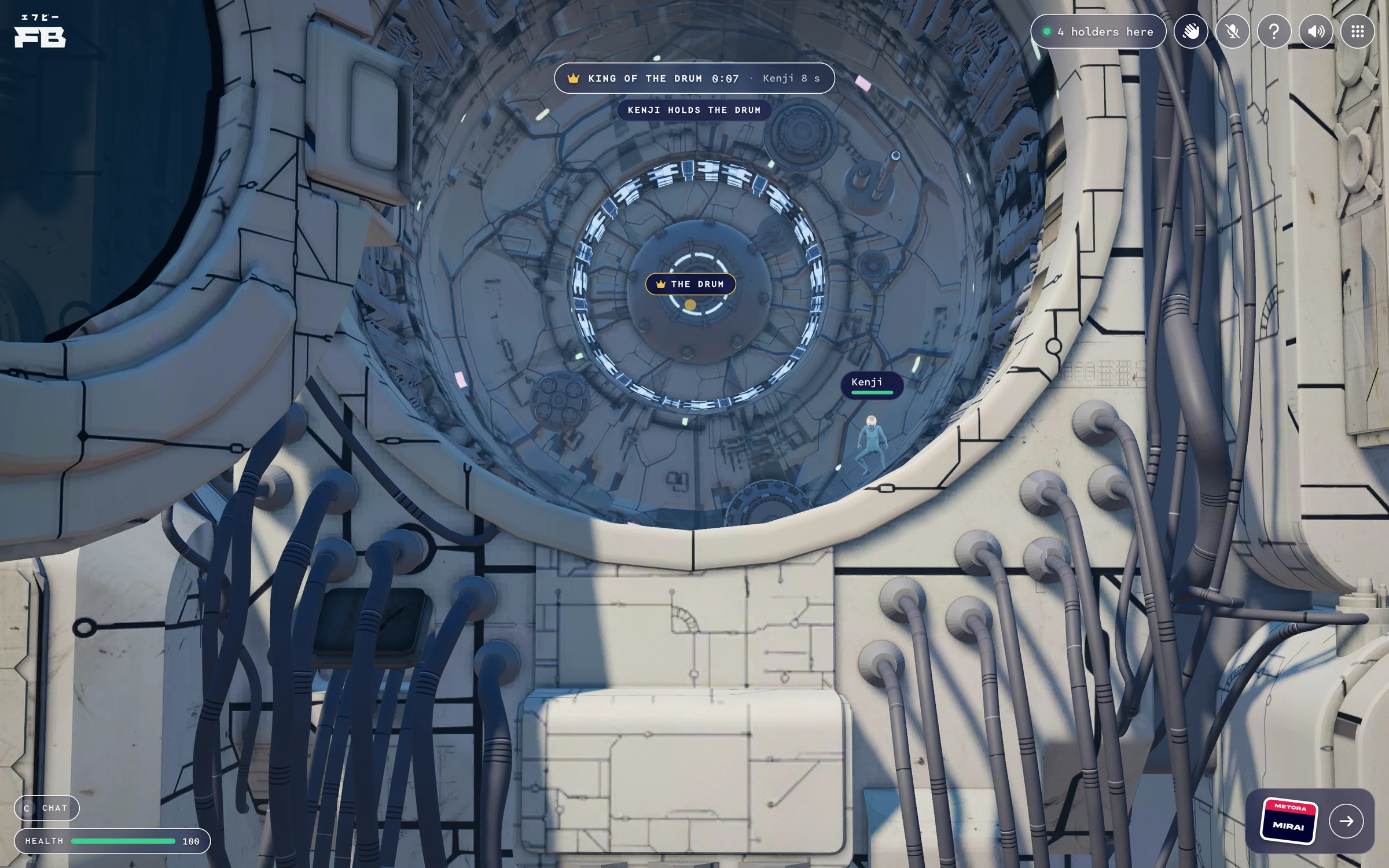
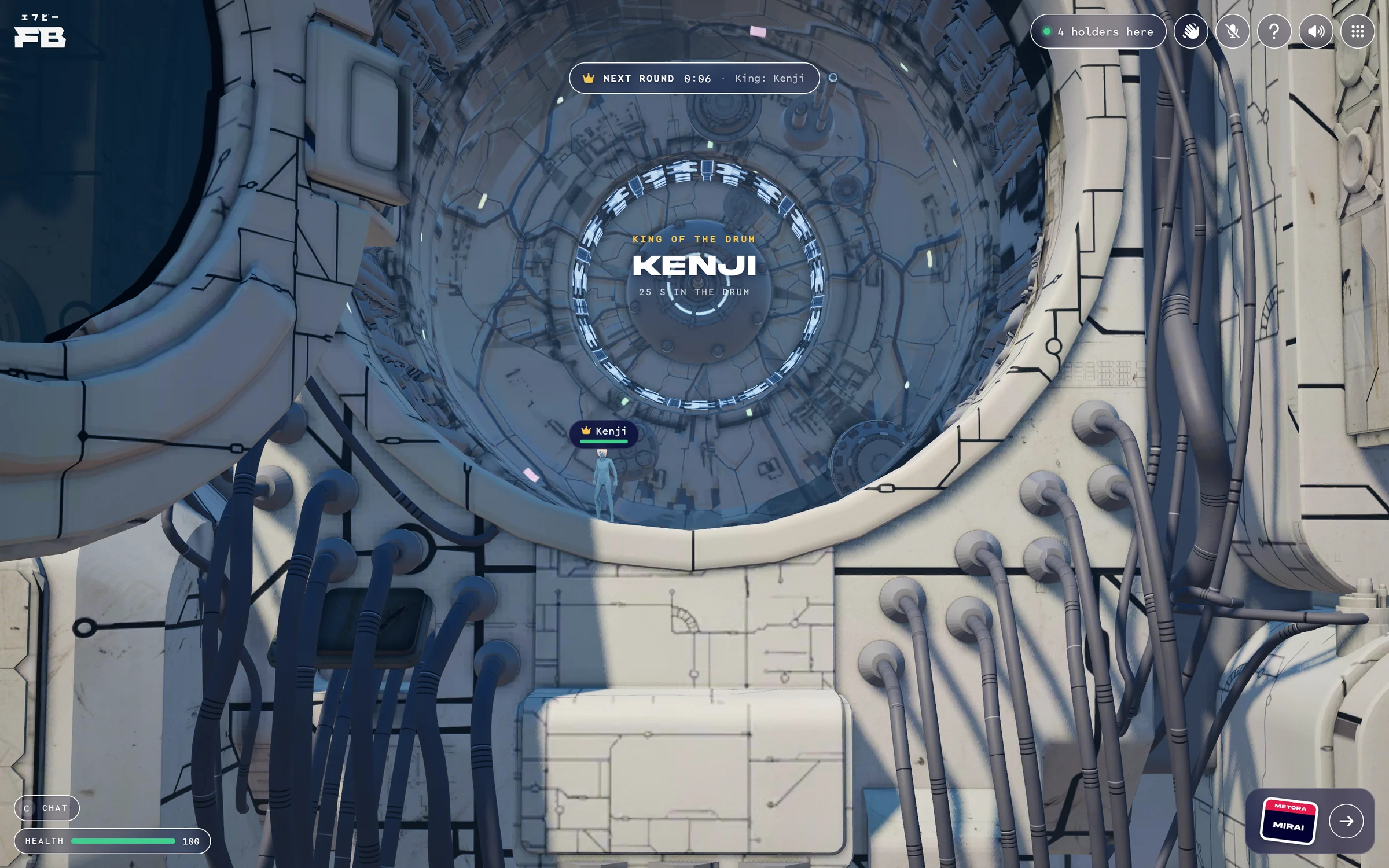
A crowd needs something to do together, so the lobby has a game mode. Rounds of three minutes run whenever two or more holders are in. Whoever stands alone in Metora's drum scores, two inside contest it, and the holder with the most time wins a banner and a gold crown on their name tag.
Voice and chat
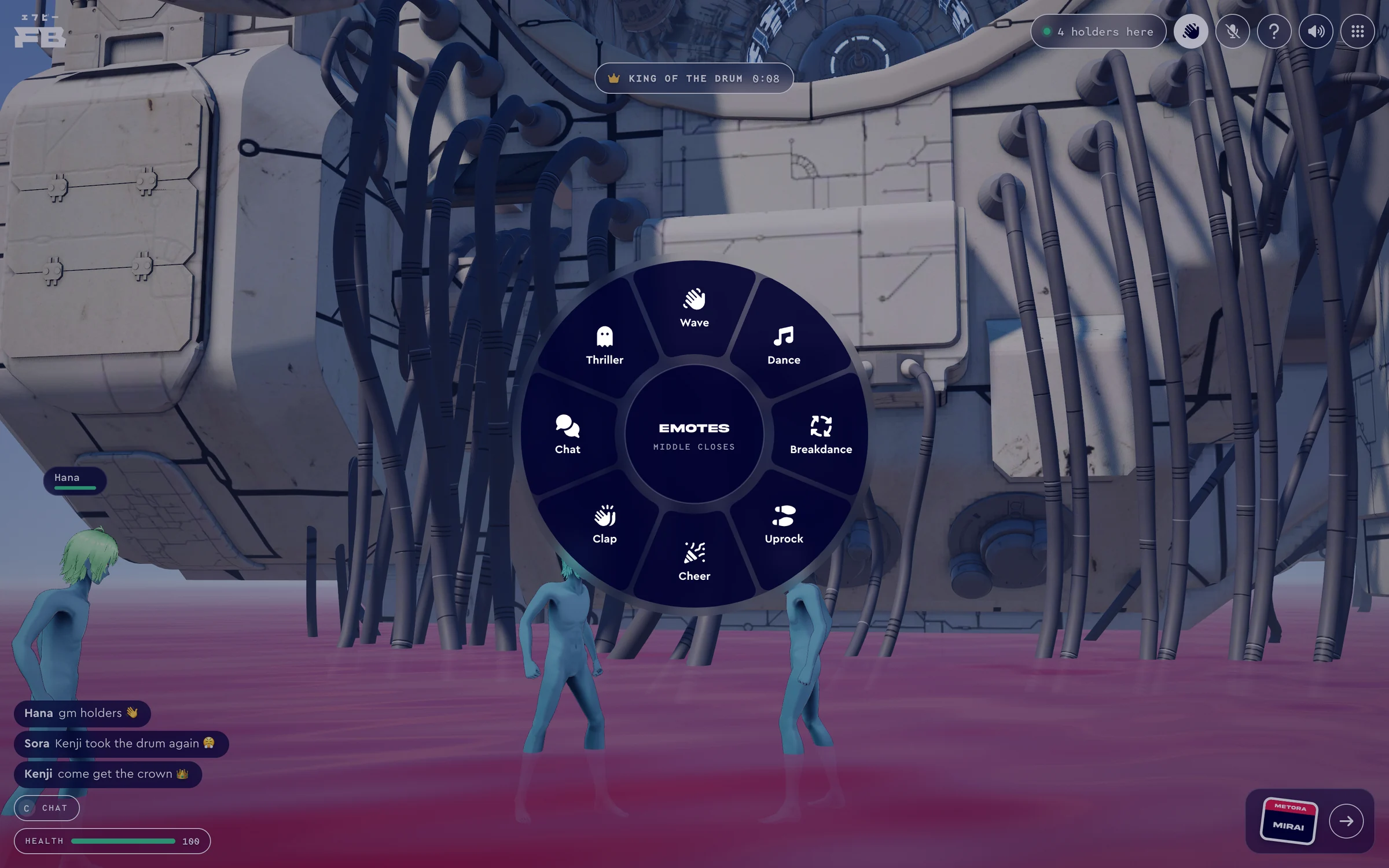
Holders talk with proximity voice. Hold V and everyone within 20 metres hears you from where you stand. The voice runs through a relay, so holders never see each other's address, and nothing is recorded. There is chat with an emoji picker, its lines never stored, and an emote wheel with dances, a wave and Thriller.
Built for a crowd
A room server on the edge runs the lobby. It judges every blow, sticker, knockout and respawn, keeps one seat per collector and turns away pages older than itself, so an update reaches everyone at once. With 39 holders on screen the lobby first ran at 21 frames a second. Drawing only the walkers in view, and moving hair only on the eight nearest, brought it to 46.
- First room to game mode
- Under a day
- Holders at once
- Up to 40
- Moves to find
- 15
The public game got a small taste of it, the emote wheel and the moves to find, with nothing saying where they come from. Curious players go looking, and the trail leads to MEMO.
The 3D artist built Metora, the relay pillars and the playable character. The world and its lore come from Final Bosu's creative team.